
Introduction
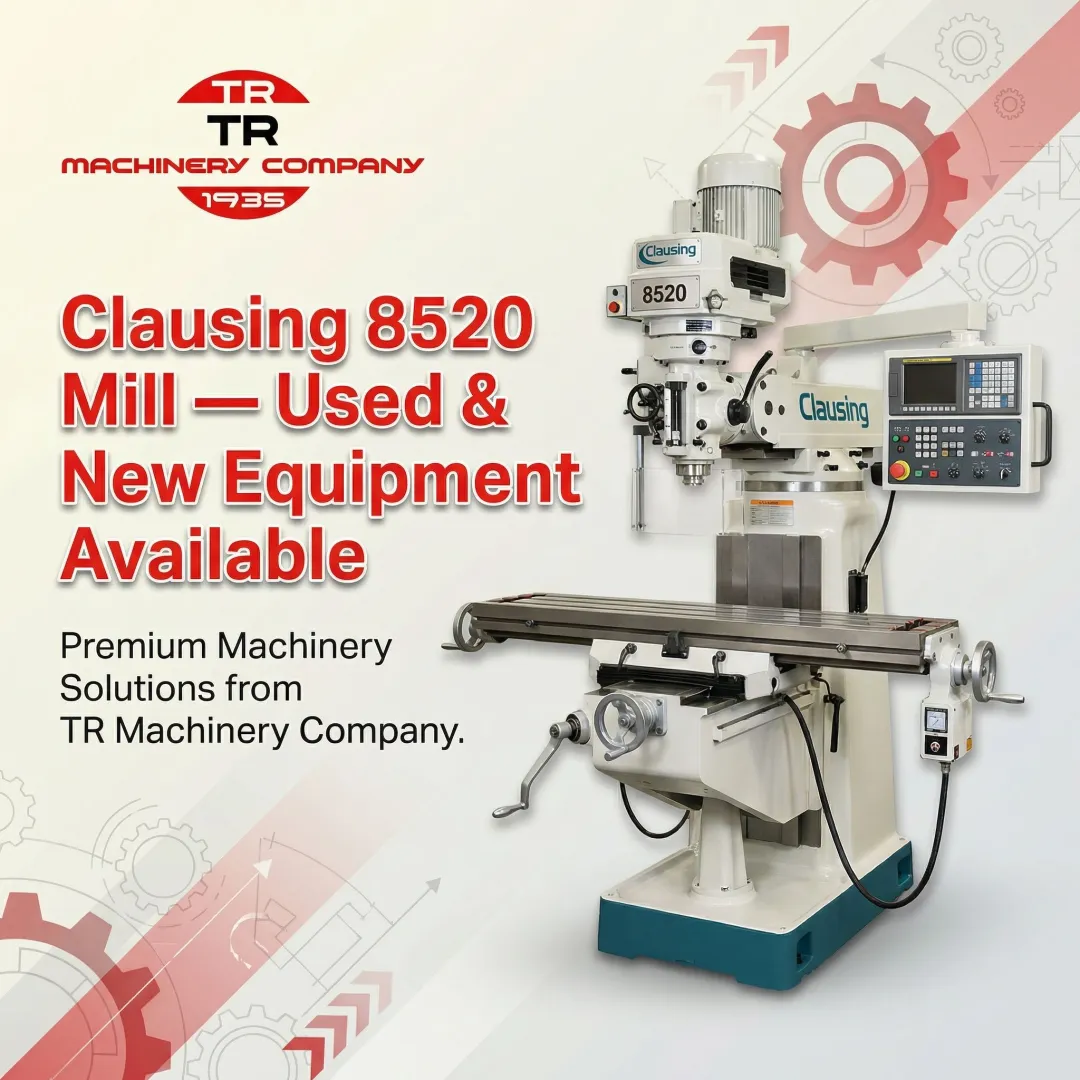
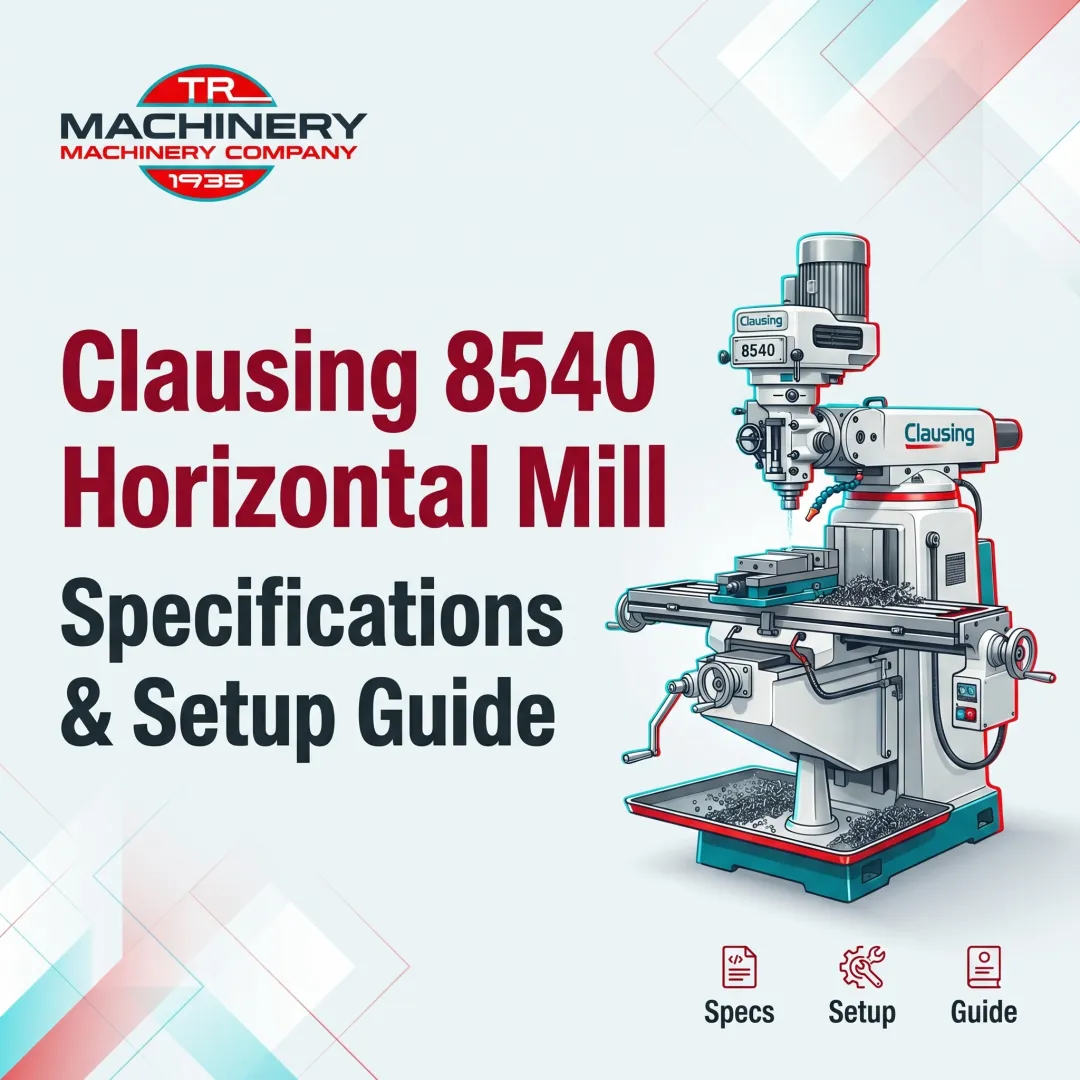
The Clausing 8530 stands as one of the most respected American-made knee mills ever produced for serious hobbyists and small-shop machinists. Built in Kalamazoo, Michigan by Clausing Industrial, this compact vertical mill has earned a loyal following thanks to its precision castings, thoughtful engineering, and adaptability to home and professional environments alike. Decades after production ended, the 8530 still commands strong prices in the used machine tool market, regularly selling for $1,500 to $2,500 depending on condition.
Its staying power comes down to practical design: a compact footprint that fits residential basements, a variable-speed head that eliminates belt changes, and an MT2 spindle taper with abundant, affordable tooling.
Buyers shopping for a used 8530 tend to have the same core questions — and this review answers all of them:
- Is the 8530 still a good buy in 2025?
- How does it compare to a Bridgeport in real-world use?
- Where do you source replacement parts and bearings?
- What do specifications and model variants tell you before you buy?
TLDR: What You Need to Know About the Clausing 8530
- Compact variable-speed vertical knee mill built for precision work in home shops and small professional operations
- MT2 spindle taper with 3/8-16 drawbar — tooling is widely available and affordable
- Variable-speed drive eliminates belt changes; closely related to the step-pulley 8520 model
- Parts remain available through Clausing's service center and third-party suppliers — restoration is feasible
- Good used examples offer strong value — capable knee mill performance without Bridgeport footprint or cost
Clausing 8530 Mill: Key Specifications at a Glance
Core Machine Specifications
| Specification | Clausing 8530 (Variable Speed) |
|---|---|
| Table Size | 6-3/4" × 26-1/8" |
| Longitudinal Travel (X) | 17-1/4" |
| Cross Travel (Y) | 5" |
| Vertical Travel (Z) | 10-1/4" |
| Spindle Taper | Morse Taper #2 (MT2) |
| Drawbar Thread | 3/8-16 |
| T-Slot Width | 9/16" |
| Machine Weight | ~720 lbs |
| Overall Footprint | 43" × 43-1/2" × 70" |
What These Numbers Mean in Practice
The 8530's work envelope suits small-to-medium parts machining. Compared to a Bridgeport Series I (9" × 42" table, 20" longitudinal travel), it trades table real estate for a compact footprint — a practical fit for toolrooms, prototype departments, and small job shops with limited floor space.
At ~720 lbs, the machine can be broken down into manageable subassemblies for installation in tight spaces, which simplifies placement without requiring a full crane setup.
The 9/16" T-slot width directly affects workholding: standard 1/2" T-nuts fit with minor side clearance, and you'll want to size vises and rotary tables carefully (more below). The MT2 spindle taper, shared with many modern import mills, keeps tooling costs low and options plentiful.
Material Capability
The 8530 handles aluminum, brass, and mild steel effectively for light-to-medium cuts. It's not built for high-volume production, but for one-off parts, prototyping, toolmaking, and general machining work, it performs well within its size class.
History & Model Variants of the Clausing 8500 Series
Clausing Industrial, founded in Kalamazoo, Michigan, produced the 8500 series primarily for the American industrial and educational market. The 8520 was the baseline step-pulley model, while the 8530 introduced a variable-speed head, heavier knee, taller column, and two-speed hand-feed for the table. Both models share the same platform, MT2 spindle, and most components.
Key Model Variants:
- 8520: Step-pulley drive, MT2 spindle — the most common variant
- 8530: Variable-speed head version of the 8520 platform — preferred by many machinists for flexibility across different materials and cutter diameters
- 8525 / 8535: Brown & Sharpe #7 taper spindle variants — avoid these unless you already own B&S #7 tooling, as tooling is scarce and expensive
- 8512 / 8513: Sold without a standard head or fitted with a Bridgeport M-head — rare and less documented
- Paint variants: Most machines are medium gray; early units occasionally appeared in tan

Critical Buying Consideration:
Always verify the spindle taper before purchasing. MT2 models enjoy wide tooling availability from suppliers like LittleMachineShop, CDCO, and MSC.
B&S #7 taper variants (8525/8535) are virtually obsolete for tooling, making them less practical for most shops. That one spec determines whether your used mill is a practical, tooling-rich machine or a frustrating parts-hunting project.
Design, Build Quality & Performance
The Knee and Column
The 8530's rigidity comes from heavy cast-iron construction relative to its overall size, allowing it to handle light-to-medium cutting operations with minimal chatter. The knee elevation mechanism is robust and similar to other American knee mills of the era.
The table features:
- Hand wheels on both sides (some early models had right-side wheels only)
- Adjustable gibs for precise control of table movement
- 9/16" T-slots for workholding
- Lead screw design using 3/4" ACME thread — worn lead screws can be replaced with standard 3/4" ACME rod, a practical upgrade documented by the machining community
The Quill and Spindle
The quill drive plate includes spring plungers (brass or nylon) that add drag to prevent the quill from dropping freely and ensure quiet operation. Not all machines left the factory with these installed, but they can be retrofitted.
The retrofit uses 1/4-20 screws drilled and tapped into the plate edge. Each hole houses a plug and compression spring that bears on the splines.
Drawbar Design Evolution:
Clausing changed the drawbar design across production years:
- Early design: Ring brazed onto the 3/8-16 drawbar that fits under a large knurled nut — allows collet ejection without a hammer
- Mid-production: Two-nut design — requires brass hammer to dislodge tooling
- Late production: No threads on top of quill — brass hammer required
When inspecting a used 8530, confirm which drawbar generation you have — the early ring-and-nut design is the most user-friendly and worth prioritizing.
Spindle Bearing Quality:
The lower spindle uses Class 3 angular contact bearings (25×52×15mm, 39-degree contact) matched and ground as a set. These are no longer supplied by Clausing directly, but suitable replacements (Fafnir 7205WNSU) are available. Spindle bearing condition is the single most important factor to assess when evaluating a used 8530. Runout should be 0.0003" or less; anything higher indicates worn bearings or improper installation.

Variable-Speed Drive (8530-Specific)
The 8530's variable-speed head eliminates the need for belt changes when switching speeds — a practical advantage over the step-pulley 8520. Machinists often prefer variable speed for flexibility when working across different materials and cutter diameters.
The drive system uses standard automotive 4L V-belts — part numbers 4L-220 and 4L-480 for the 8520/8530 platform. Replacements are inexpensive and widely available at auto parts stores.
Tooling, Accessories & Upgrades
Compatible Tooling
MT2 Tooling Compatibility:
The 8530's MT2 spindle with 3/8-16 drawbar thread opens access to a wide range of affordable tooling:
- MT2 collets (standard sizes from 1/8" to 5/8")
- End mill holders
- Drill chucks
- Shell mill arbors
- Face mill arbors
Suppliers like LittleMachineShop, CDCO, MSC, and Shars offer compatible options. The MT2 standard — shared with many modern import mills — keeps costs low and options plentiful, unlike the scarce B&S #7 taper on 8525/8535 variants.
Workholding Sizing Guidelines:
The 8530's compact table demands careful accessory sizing:
- Vises: A 4-inch vise fits perfectly; a 5-inch vise requires using the furthest back T-slot and still overhangs the inside edge, limiting Y-axis travel
- Rotary Tables: A 4-inch or 6-inch rotary table works well; an 8-inch table is too large for comfortable use
- General Rule: Without a swivel base, vises save height and maximize usable Z-axis travel

Recommended Upgrades
Digital Read-Out (DRO):
Installing a 3-axis DRO is one of the most popular and practical improvements owners make. A DRO eliminates backlash error, improves repeatability, and speeds up layout work. Standard linear scale kits fit the machine, though you'll need to fabricate custom mounting brackets.
Beyond modern aftermarket additions, several factory-era options remain worth tracking down for period-correct setups.
Factory-Era Accessories:
- Quill Stop: Enhances depth control for drilling and boring operations
- Clausing 8635 Power Feed: Period-correct option, but notorious for poor design — the gear engagement lever lifts the entire body to separate gears, causing binding and potentially bending the gear shaft if dropped into gear too quickly
- Clausing 8630 Measuring Attachment: Adds precision measurement capability
Sourcing New Equipment:
For shops sourcing a replacement or comparable knee mill, T.R. Wigglesworth Machinery Co. (Bedford, Ohio) carries new and used vertical milling machines and maintains an extensive Clausing parts inventory — useful whether you're upgrading or keeping an 8530 running long-term.
Maintenance, Parts & Restoration
Sourcing Replacement Parts
Primary Parts Sources:
- Clausing Service Center: Goshen, Indiana (800-535-6553) — still stocks some parts and manuals for the 8500 series
- Third-Party Suppliers: McMaster-Carr, Boston Gear, and bearing distributors
- Machining Community: Online forums and IO groups provide cross-reference guides and archived documentation
The owner's manual and parts diagram are archived in IO group libraries — download both before ordering any parts or starting disassembly.
Quill Gear Replacements:
The quill gears can be fragile (32 DP and 24 DP spur gears). Cross-references to off-the-shelf industrial components:
- 32 DP Gear: Boston Gear S-3232 (32 DP, 14.5° pressure angle, 32 tooth)
- 24 DP Pinion: McMaster-Carr 6325K31 — requires only minor machining to reduce hub thickness
Before Replacing Gears: Dried grease, not damage, is often the culprit when gears feel "crunchy." Clean and re-lubricate before assuming replacement is needed.
The same logic applies to bearings — assess condition carefully before sourcing replacements, as proper preload and grade matter more than simply swapping parts.
Bearing Replacement Guide
Quick-Reference Bearing List:
| Component Location | Clausing Part Number | Modern Equivalent / Specs |
|---|---|---|
| Lower Spindle (Matched Pair) | 044-005 | Fafnir 7205WNSU (25×52×15mm, 39-40° angular contact, Class 3) |
| Upper Head Bearing | N/A | Fafnir 304KDD / 6304ZZ |
| Upper Spindle Bearing | 044-016 | Fafnir 204KDD / 6204ZZ |
| Step Pulley Bearings | 044-007 | Fafnir 9105KDD / 6005ZZ |
| Knee Shaft Bearings | 044-008 | NICE 1607DS |

Critical Bearing Detail:
Lower spindle bearings are the hardest to source and the least forgiving. They must be Class 3 precision-ground angular contact bearings, mounted flush and duplexed for minimum preload. Standard-grade replacements will degrade spindle runout. Measure runout (target: 0.0003" or less) as a key diagnostic when evaluating any used 8530.
Paint and Cosmetic Restoration
The standard color is medium gray (early machines may be tan). Owners have successfully color-matched Benjamin Moore Urethane Alkyd Gloss Enamel. Bring a small painted component to a local paint dealer for matching rather than relying on formula codes alone, as paint batches vary.
Who Should Buy the Clausing 8530 — and What to Pay
Who It's Built For
The 8530 is best suited for:
- Serious hobbyists needing precision and rigidity in a compact package
- Vocational and educational shops where students learn on American-made equipment
- Small professional operations doing one-off parts, prototyping, and toolmaking
- Home machinists who need basement-friendly installation and manageable weight
It's a poor fit for:
- Production machining (high-volume, repetitive work)
- Large part fabrication (table size limits work envelope)
- Shops requiring heavy hogging in hardened steel
Used Market Pricing
The 8530 routinely sells for $1,500 to $2,500 in good condition — a "basement premium" tied to its ~720-lb weight and ability to be broken down for stairs. Industrial auctions occasionally yield bargains (some machines have sold for under $700), but condition varies widely.
Key Inspection Points
Before purchasing, check:
- Spindle bearing runout (should be 0.0003" or less)
- Quill gear condition (listen for crunching; inspect for chipped teeth)
- Table gib tightness (excessive play indicates wear)
- Drawbar type (early ring-and-nut design is most desirable)
- Variable-speed drive functionality (belts, pulleys, speed adjustment mechanism)

Dealer vs. Private Sale
Most of these inspection points require hands-on evaluation — which is where dealer sourcing earns its premium. Working with an established machinery dealer reduces the risk of buying a machine in unknown condition compared to private sales. T.R. Wigglesworth Machinery Co. has sourced and serviced machine tools since 1935 and carries both new and used vertical milling machines as an authorized Clausing dealer, with direct access to parts and service support.
Frequently Asked Questions
What is the difference between the Clausing 8520 and the Clausing 8530?
The 8520 uses a step-pulley drive requiring manual belt changes for speed adjustments, while the 8530 uses a variable-speed head for on-the-fly speed control. Both share the same basic platform, MT2 spindle taper, and most components.
What spindle taper does the Clausing 8530 use?
The 8530 uses a Morse Taper #2 (MT2) spindle with a 3/8-16 drawbar thread. MT2 tooling is widely available and affordable — the 8535 uses Brown & Sharpe #7, which has extremely limited tooling options by comparison.
Is the Clausing 8530 suitable for a home or basement shop?
Yes, for light production and toolroom use. Its compact footprint, ~720-lb weight, and ability to be disassembled into lighter subassemblies make it practical for smaller shops with limited floor space or restricted access.
What table size and travel does the Clausing 8530 have?
The table measures 6-3/4" × 26-1/8" with 17-1/4" longitudinal travel, 5" cross travel, and 10-1/4" vertical travel.
Where can I find parts for a Clausing 8530?
Clausing's service center in Goshen, Indiana (800-535-6553) is the primary OEM source for parts and manuals. T.R. Wigglesworth Machinery Co. is also an authorized Clausing dealer and carries parts inventory with knowledgeable support for sourcing hard-to-find components.
What size vise and rotary table fit the Clausing 8530?
A 4-inch vise fits perfectly; a 5-inch vise will overhang the table and limit Y-axis travel. For rotary tables, a 6-inch model works well, but an 8-inch table is too large for comfortable use on this machine's table.