Introduction
At some point, most fabrication shops hit the same crossroads: build a welding table in-house to save money and dial in dimensions, or buy a professionally manufactured one. The right answer depends on what you're welding, how precise your work needs to be, and what your time is actually worth.
The stakes go well beyond purchase price. Surface flatness, structural stability, and fixturing compatibility affect weld accuracy, repeatability, and long-term operational efficiency. A warped DIY table introduces distortion into every project built on it; a precision-machined surface holds the tolerances professional fabricators depend on.
This guide covers the key factors — cost, flatness, build time, and fixturing capability — so you can make a clear-eyed decision for your shop.
Key Takeaways
- Buying a welding table gives you immediate precision, structural durability, and modular fixturing that DIY builds rarely match
- DIY builds allow dimensional customization and lower material costs, but time, tools, and sourcing typically close that gap fast
- Achieving professional-grade flatness at home is extremely difficult without industrial machining equipment
- For hobbyists and makers with basic accuracy needs, a DIY build can be rewarding and viable
- Production shops, precision fabricators, and heavy manufacturers will almost always get more value from a purpose-built table
Buy vs. Build Welding Table: Quick Comparison
Upfront Cost
Entry-level commercial welding tables start around $500 for basic 2D kits (such as CertiFlat 24"×24" starting at $507.99), while professional 3D fixture tables range from $3,800 to over $14,000 depending on size and brand.
A generic A36 steel plate may cost anywhere from $400 to $1800 depending on thickness, supplier, region, and order quantity. Sources: Steelbenchmarker, Leeco steel, Alibaba. Note: Local pricing should be quoted before estimating a DIY build. Even with an average of $1100, materials are just one line item. Cutting tools, welding consumables, grinding discs, fasteners, and casters add up fast. On an average a DIY build of a 2m × 1m table consumes three weeks of spare time and roughly $1,000–$1,100 in materials once laser-cut plates are factored in.
Surface Precision and Flatness
Manufactured tables are machined or engineered to tight tolerances—typically 0.2 - 0.4 mm/m (0.0078" - 0.0157" per foot) for industrial models, with premium modular bases achieving ±0.02" to ±0.06". A shop-built flat-plate table on legs will deflect and warp more readily under load without professional-grade support infrastructure. Achieving premium machine grade flatness (±0.0157" over 24 inches) at home is nearly impossible.
Time to Productivity
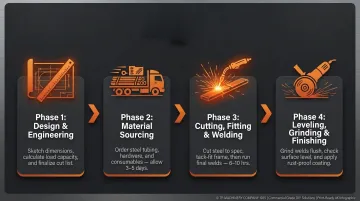
A purchased table is ready for use immediately (once an order is ready after customizations)—unbox, level, and start welding. A DIY build works through several phases before you cut a single workpiece:
- Design and engineering (dimensions, load capacity, leg geometry)
- Material sourcing and delivery lead times
- Cutting, fitting, and welding the structure
- Leveling, grinding, and surface finishing
That sequence easily spans days to weeks. For professional shops where labor constitutes 69% to 85% of total welding costs, that downtime has a real dollar figure attached to it.
Customization vs. Standardization
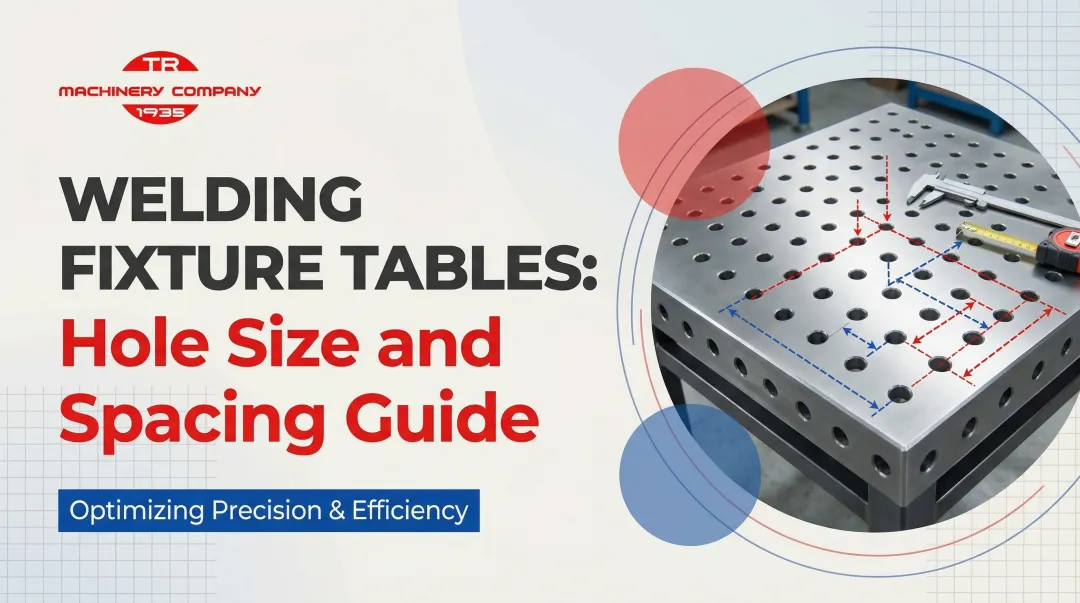
DIY allows full control over dimensions, height, and layout—valuable if your workspace has unusual constraints or you need a non-standard working height. Bought tables offer standardized fixturing hole systems (grids of threaded or through-holes, typically 16mm or 28mm holes) that are compatible with a broad ecosystem of clamps, stops, squares, and accessories from multiple manufacturers. That standardization matters most in production environments where fixture repeatability directly affects part quality.
Buying a Welding Table: Pros and Cons
Pros of Buying
Consistent Quality and Precision
Manufactured welding tables—especially 3D fixture tables—are engineered with reinforced support grids and machined surfaces that maintain flatness under heavy loads. Interlocking rib structures under a thinner top plate can outperform a solid thick plate for deflection resistance.
FEM-optimized ribbing allows manufacturers to achieve load capacities of up to 3,000 kg per leg, while keeping overall weight manageable.
Immediate Readiness and Productivity
A purchased table requires no build time. For professional welders and fabrication shops where the national average welding rate is $60–$125/hour, that means fabricators can invoice from day one. For industrial operations in aerospace, heavy manufacturing, or precision fabrication, lost production time during setup is a measurable cost.
Access to Standardized Fixturing Ecosystems
Manufactured fixture tables use standardized whole systems—commonly 16mm (on 50mm grids) or 28mm (on 100mm grids)—compatible with clamps, stops, squares, and risers from multiple manufacturers. Tooling is generally compatible with all welding tables featuring the corresponding borehole size. However, tooling compatibility should be verified by hole diameter, grid spacing, table thickness, hole style, and accessory standard. This professional-grade workholding capability is difficult to replicate on a homemade table.
Modular Expandability
Many professional tables feature bolt-together sidewalls and modular blocks, letting shops extend work surfaces in 3D without starting over. That structural approach pays dividends: Some 3D welding tables are up to 30 times stronger than 2D flat plates of the same thickness—a result a simple DIY flat-plate build can't match.
Cons of Buying
- Higher upfront cost: Entry-level commercial 2D kits start around $350–$550; mid-tier professional 3D tables range from $4,000 to $5,800+; high-end industrial systems (such as Almaco premium tables) can exceed $8,600 for 4'×8' bundles.
- Less dimensional flexibility: Purchased tables come in fixed sizes. A shop with unusual space constraints or highly specialized project dimensions may find a custom-built solution more practical.
When Building a Welding Table Makes Sense
Pros of Building
Building your own welding table has real advantages — but they come with conditions worth understanding before you commit.
- Lower upfront material cost: Structural steel sourced locally or from scrap reduces initial spend compared to buying new. That said, cut-off blades, grinding discs, welding consumables, fasteners, and casters add up fast. The savings are real — just smaller than most builders expect.
- Full dimensional control: You set every dimension — length, width, height, leg design. Useful when your workspace has unusual constraints or you need a non-standard working height.
- Skill-building value: For hobbyists and students, building a table is a legitimate fabrication project. It reinforces layout, squareness, and structural welding — practical experience that transfers directly to other work.
Cons of Building
Flatness is the hardest problem to solve. Welding generates intense local heat and severe thermal gradients. The uneven cooling produces residual stresses and distortion — warping, shrinkage, and angular distortion. Residual stresses after welding can reach the yield strength of the base material. Without a surface grinder or industrial fixtures, holding flatness within acceptable tolerances is nearly impossible in a home shop. A warped surface introduces error into every project built on it.
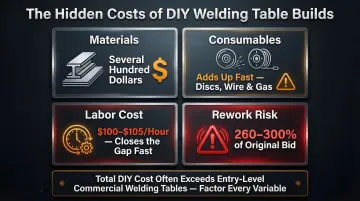
The true cost picture is murkier than it looks upfront:
- Materials: Steel plate top, square tube legs, and bracing alone typically run several hundred dollars
- Consumables: Cut-off blades, grinding discs, welding wire, and fasteners add to the total
- Labor: When time is valued at market rates ($60–$125/hour), dozens of shop hours close the gap with entry-level commercial tables quickly
- Rework risk: Poor fixturing inflates weld rework may cost to 260–300% of the original bid — an expensive consequence of a table that can't hold repeatable setups
A simple flat-plate DIY table with no standardized hole grid limits clamping to improvised edge clamps and magnetic squares. For production work or precision fabrication, that limitation is a significant constraint — not just an inconvenience.
Buy or Build: Which Is Right for You?
Factors to Weigh Before Deciding
Consider these key variables:
- Precision requirements: Is the table used for tack-up only, or is dimensional accuracy critical?
- Project scale and volume: One-off hobby builds vs. production runs
- Available tools and fabrication skills: Do you have the equipment and experience to build a structurally sound table?
- Available budget: Initial capital vs. total cost including time
- Time value: How much is your own time worth?
Situational Recommendations
Choose to build if:
- You are a hobbyist or student
- You have basic accuracy needs (general tack-up, non-critical dimensional work)
- You want a rewarding hands-on project
- You have structural welding skills and access to materials
- You have unusual dimensional requirements that standard tables can't accommodate
Choose to buy if:
- You are a professional fabricator
- You need fixture table functionality and repeatable setups
- You work in precision or production environments
- You cannot afford the time cost of construction
- Surface flatness and standardized fixturing are critical to your work quality
The Industrial and Precision Manufacturing Case
For operations in aerospace, medical device manufacturing, heavy fabrication, or precision machining—where weld accuracy and repeatability directly affect part quality—a professionally manufactured fixture table is a direct productivity and quality control investment. Using a fixture table can reduce setup time by 30-50% and rework by 20-40%.
T.R. Wigglesworth Machinery Company has supplied industrial fabricating equipment to manufacturers since 1935, including welding tables from brands such as ALMACO.
Consider consulting with an equipment provider who knows your application to match table specifications to your actual shop requirements before committing to either path. Getting the specification right the first time is almost always cheaper than correcting it after purchase.
| Product | Product Details |
|---|---|
| 4'x8' Welding Table | Explore Product |
| 4'x4' Welding Table | Explore Product |
| 3'x5' Welding Table | Explore Product |
Conclusion
The decision to buy or build a welding table has no universal winner. Building suits hobbyists and makers with basic needs and fabrication skills—it's a rewarding project that develops welding technique and provides a customized solution. Buying suits professionals, production operations, and anyone for whom surface precision and fixturing capability are non-negotiable.
The right table affects weld quality, setup repeatability, worker ergonomics, and long-term cost. Before committing to either path, pin down your precision requirements, available build time, and how the table will be used daily. A bought table earns its cost back through reduced rework and faster fixturing; a built table earns its worth through the skills and fit-for-purpose design you get in return.
Frequently Asked Questions
Are welding tables worth the money?
For professional and production welders, yes—a quality welding table pays for itself in improved accuracy, reduced rework, and faster setups. For hobbyists with basic needs, an entry-level table or well-built DIY version can offer adequate value.
What to look for in a welding table?
Prioritize these three factors above all else:
- Surface flatness and material quality — determines long-term accuracy
- Fixturing hole system (16mm or 28mm) — drives clamp and accessory compatibility
- Structural stability and weight capacity — ensures the table handles real production loads
What is the best material for a welding table?
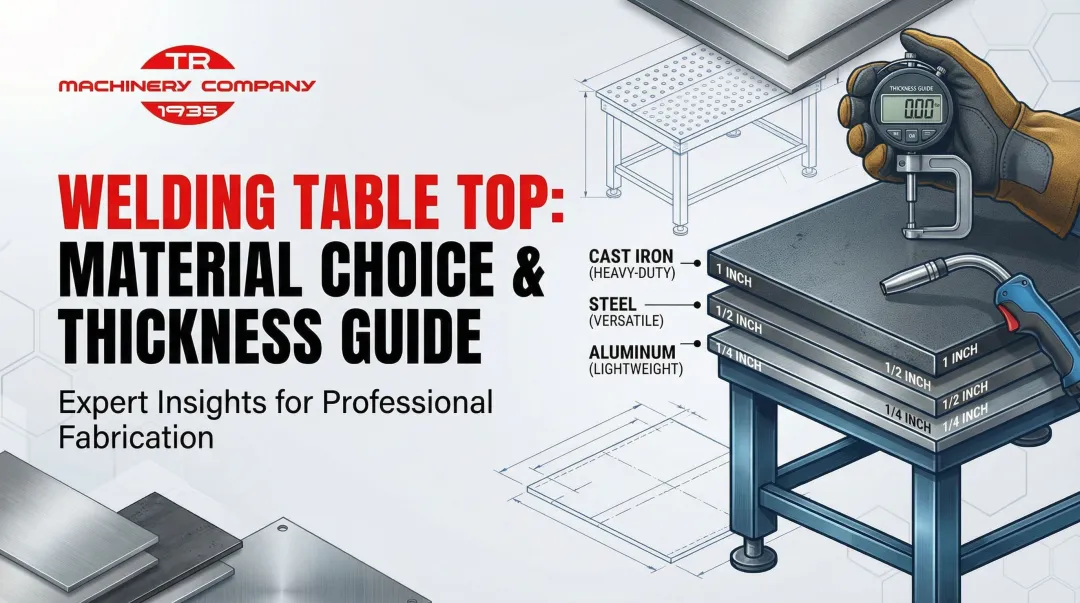
Carbon steel (such as A572-50 or A36) is the most practical choice for most welders—strong, affordable, repairable, and compatible with all welding processes. Cast iron offers excellent flatness but is brittle and heavy; stainless and aluminum are specialty options for specific applications.
How much does it cost to build a welding table?
Material costs vary by region and design, but a basic DIY table (steel plate top, square tube legs and bracing) typically runs several hundred dollars in materials alone—not counting tools, consumables, or the welder's time. Total cost often lands closer to a manufactured entry-level table than most builders anticipate.
Can I achieve professional flatness on a DIY welding table?
Rarely. Welding the table frame itself introduces heat distortion, and without surface grinding or industrial fixturing during fabrication, achieving flatness within fractions of a millimeter per foot is extremely difficult at home. Manufactured tables solve this problem before they ship.
What is the difference between a 2D and 3D welding table?
A 2D table is a flat plate surface—simple and affordable, but limited in fixturing capability. A 3D table adds sidewalls and a standardized hole grid for clamps, stops, and extensions—making it significantly stronger, flatter, and more versatile for professional fabrication work.