
Introduction
Ordering a machine tool that doesn't exist yet feels different from buying one off a lot. A built-to-order FERMAT machine is configured and produced around your documented application, performance targets, and facility conditions, not pulled from a standard inventory list.
This matters most for manufacturers in aerospace and defense, medical devices, mold work, heavy manufacturing, and general production, where accuracy, repeatability, and uptime carry real financial weight.
Many buyers struggle with the same questions: What decisions actually change the final machine? What do I need to prepare before I even request a quote? What happens between order confirmation and the first cut?
This article walks through the full process, from initial application review to installation and training, so you know what to expect at each stage.
Key Takeaways
- A built-to-order purchase starts with your application and site requirements, not a model number or price sheet.
- Workpiece specs, tolerances, tooling, controls, and facility limits all shape the final configuration.
- Written approvals matter because post-production changes can affect cost and schedule.
- Delivery, installation, commissioning, and training need to be defined before you sign.
- Complete technical documentation and a single internal decision-maker cut down on delays.
What Does "Built-to-Order" Mean for a FERMAT Machine, and Why Is It Used?
A built-to-order machine differs from an off-the-shelf unit in one key way: it's engineered around your specific requirements after you place the order, not selected from a finished machine sitting on the floor.
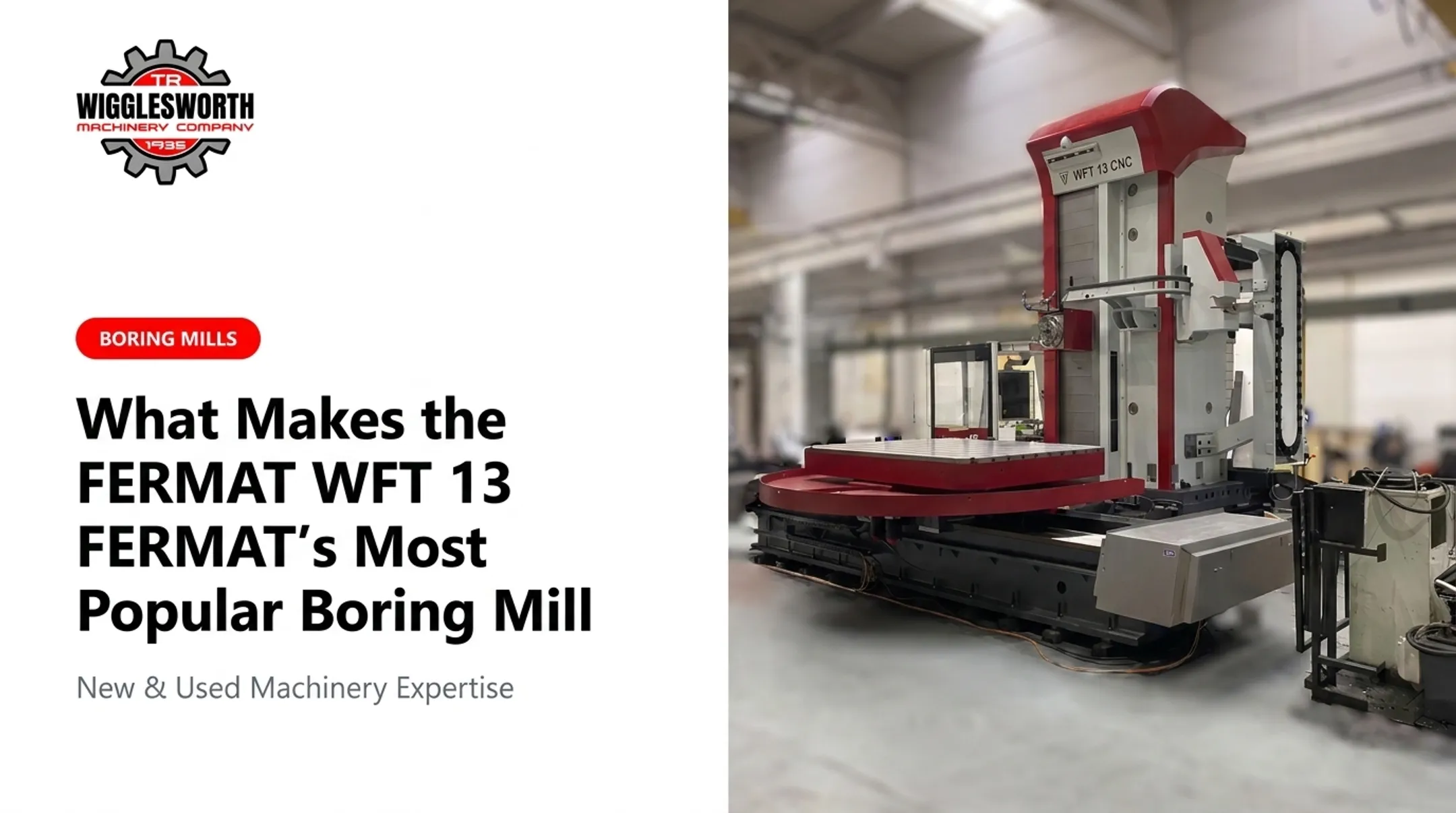
FERMAT offers both paths. The WFT-13R, for instance, is listed as "NEW - Build to Order," while the standard WFT-13 is available in stock for immediate delivery. Same family, different production path.
The goal of the build-to-order approach is straightforward: match the machine to your work envelope, materials, accuracy needs, production volume, and operator workflow, rather than asking your process to bend around a generic spec sheet.
How This Differs From Repair or Modification
Built-to-order configuration is not the same as:
- Routine repair or replacement-part service on an existing machine
- Retrofitting or upgrading a machine you already own
- Modifying a used machine to fit a new job
None of those is a built-to-order new machine. Parts and tooling keep an existing unit running. Retrofit and used-machine mods change hardware you already own. Built-to-order configuration happens during manufacture, before the machine reaches your floor.
Why Buyers Choose This Route
Standard equipment doesn't always cover unusual part sizes, specialized machining operations, or specific control and automation needs.
The WFT 13/15 (R,L) handles workpieces up to 20 tons with a 130 mm or 150 mm spindle diameter and an optional 700 mm ram stroke. The FERMAT WCF 10 (L), by contrast, is built for shops with limited floor space and pieces up to 5 tons. Neither is a universal fit.

Built-to-order configuration lets you specify spindle size, control platform (HEIDENHAIN, Siemens, or FANUC), tooling, and automation to match your actual work—not a compromise version of it.
How the Built-to-Order FERMAT Process Works
The process runs from initial consultation through commissioning and training. Each stage locks in decisions that shape the final machine.
Step 1: Define the Application
You and your dealer establish the application scope together. Come prepared with:
- Part drawings or a representative workpiece
- Material types and tolerance requirements
- Surface-finish expectations
- Machining processes (milling, boring, drilling, threading)
- Current and projected production volumes
- Existing tooling you plan to keep using
- Facility constraints (floor space, power, access routes)
Use this meeting to align on budget, site requirements, and who has final internal sign-off.
Step 2: Technical Review and Approval
Your dealer and the FERMAT team turn that application data into a proposed configuration—what’s standard, what needs optional equipment, and what still needs confirmation. Review:
- Included accessories versus exclusions
- Utility requirements
- Delivery terms and warranty coverage
- Installation scope and training sessions
- Acceptance criteria
Once everyone agrees, get written confirmation of the configuration—especially when engineering, purchasing, and operations all have a stake. Changes after this point usually add cost and push the schedule.
Step 3: Build, Inspect, Deliver, Install
Once approved, the machine moves into manufacturing. FERMAT has documented at least one pre-delivery inspection: a WFT 15R checked at its Brno facility before shipment.
Ask your dealer which inspection protocol applies to your build. Public documentation does not define a universal factory acceptance test for every model.
After inspection, the machine typically moves through:
- Shipment to your facility
- On-site installation
- Commissioning
- Operator training
Lead times vary by configuration. Treat any timeline as an estimate until it is confirmed in writing for your specific machine.

Where a Built-to-Order FERMAT Machine Fits and What Affects the Order
Configured FERMAT machines tend to make sense for high-precision work, oversized components, repeat production runs, and applications needing tight process control. The WRF 130/150/160/180 series, for example, handles floor-plate configurations up to 100 metric tons with X-axis travel ranging from 4,000 to 27,500 mm. That's not a machine you order casually.
The project itself typically spans several stages: capital planning, process engineering, procurement, factory inspection, facility prep, installation, and operator training.
What Can Change the Final Configuration
Three categories of factors influence scope:
- Workpiece: dimensions, weight, material, tolerances, finish, and expected volume
- Machine: envelope size, spindle/drives, axis layout, control platform, tooling, fixturing, coolant/chip handling, and automation
- Facility: floor capacity, access routes, power, utilities, environment, lifting gear, network, and operator space
A 2016 Modern Machine Shop analysis makes a point worth repeating: rotary-table and fixture footprint has to be factored into your axis travel needs, not just the raw part dimensions. Skip that step and you may find your new machine can't actually swing the fixture you need.
Pre-Order Checklist
Before requesting a quote, gather:
- Part drawings and representative samples
- Utility data (power, air, coolant)
- Floor plans and rigging/lifting access details
- Internal approval sign-offs
- Existing tooling inventory
- Desired acceptance test criteria
- Named project contacts on both sides
Confirm FERMAT-specific safety, electrical, and compliance docs with your dealer for the exact machine and destination—don't assume certifications carry across the full product line.
Common Issues and Misconceptions
Several assumptions trip up first-time buyers of custom machine tools.
"Built-to-order means I can add anything, anytime." Not quite. Options depend on the machine's design, engineering approval, and how far along production is. A change requested after manufacturing starts is a different conversation than one raised during initial configuration.
"The quoted price covers everything." It usually doesn't. Installation labor, utility hookups, software integration, training sessions, and acceptance testing are often scoped separately. Read the exclusions list as carefully as the inclusions.
"We can lock tolerances later." Incomplete data causes delays. If your tolerances or material specs shift mid-process, expect clarification cycles, revised quotes, and schedule slippage. Engineering has to rework the plan when inputs change.
"The milestones are interchangeable." Factory inspection, delivery, installation, commissioning, and production acceptance each carry different responsibilities. Know who signs off on what, and when.

A built-to-order machine isn't always the right call. Consider a standard or used machine instead when:
- You need capacity immediately
- Your application is simple and well-standardized
- You can't yet document reliable technical requirements
- Your facility isn't ready for a larger installation project
Conclusion
Ordering a built-to-order FERMAT machine is a joint project, running from application definition through configuration, approval, manufacturing, delivery, and production readiness. The strongest outcomes rest on three fundamentals:
- Accurate application requirements
- Documented configuration decisions
- A facility ready before delivery day
T.R. Wigglesworth Machinery Company has served the machine tool industry since 1935 and was the first authorized distributor to sell FERMAT machines in the United States. As a full-service provider, T.R. Wigglesworth can guide you through equipment selection and, where confirmed for your project, coordinate delivery, installation, and training.
If you're evaluating a configured FERMAT machine for aerospace, medical device, mold, or heavy manufacturing work, start the conversation with your documented application in hand.
Frequently Asked Questions
What does built-to-order mean when purchasing a FERMAT machine?
It means the machine is configured and manufactured to match your documented application and facility requirements, rather than selected from available inventory. FERMAT's WFT-13R is one example of a model offered this way.
What information do I need before requesting a built-to-order FERMAT machine?
Bring workpiece details, materials, tolerances, production targets, tooling inventory, control preferences, facility constraints, and any drawings or sample parts. The more complete this information is, the fewer revision cycles you'll face later.
How long does it take to receive a built-to-order FERMAT machine?
Timing depends on the confirmed configuration, manufacturing schedule, logistics, and facility readiness. Ask your dealer for a dated, written estimate specific to your machine rather than relying on a general industry figure.
Can I change the machine configuration after placing the order?
Sometimes, but only after a technical and commercial review. Changes made once manufacturing has started can affect cost, build time, and delivery.
What should my facility prepare before the machine arrives?
Floor capacity, access and rigging routes, power and utility connections, environmental conditions, network requirements, tooling, safety arrangements, and trained personnel all need to be in place before delivery.
Does the built-to-order process include installation and operator training?
It can, but the scope varies by project. Confirm installation, commissioning, training, and acceptance terms directly in your quotation or purchase documentation before signing.