
This first look sticks to what FERMAT's published documentation can actually confirm. We'll cover the platform's verified travel, table, and power specifications, sort out which features are standard versus configuration-dependent, and clear up the "vertical" versus "horizontal" terminology confusion.
Before requesting a quote or scheduling a rigging crew, confirm every specification against current FERMAT literature or an authorized dealer like T.R. Wigglesworth Machinery Company.
Key Takeaways
- FERMAT's documentation identifies the WPT 130 as a horizontal boring machine, not a vertical boring mill.
- Two WPT 130 configs share 4,000/2,500/1,500/800 mm X/Y/Z/W travels but differ in table size, spindle speed, power, and controls.
- No dated FERMAT bulletin confirms "L"-specific features; treat accessories as configuration-dependent until verified.
- Match confirmed table load, speed range, and controls to your parts before committing floor space or budget.
What Is the FERMAT WPT 130 L?
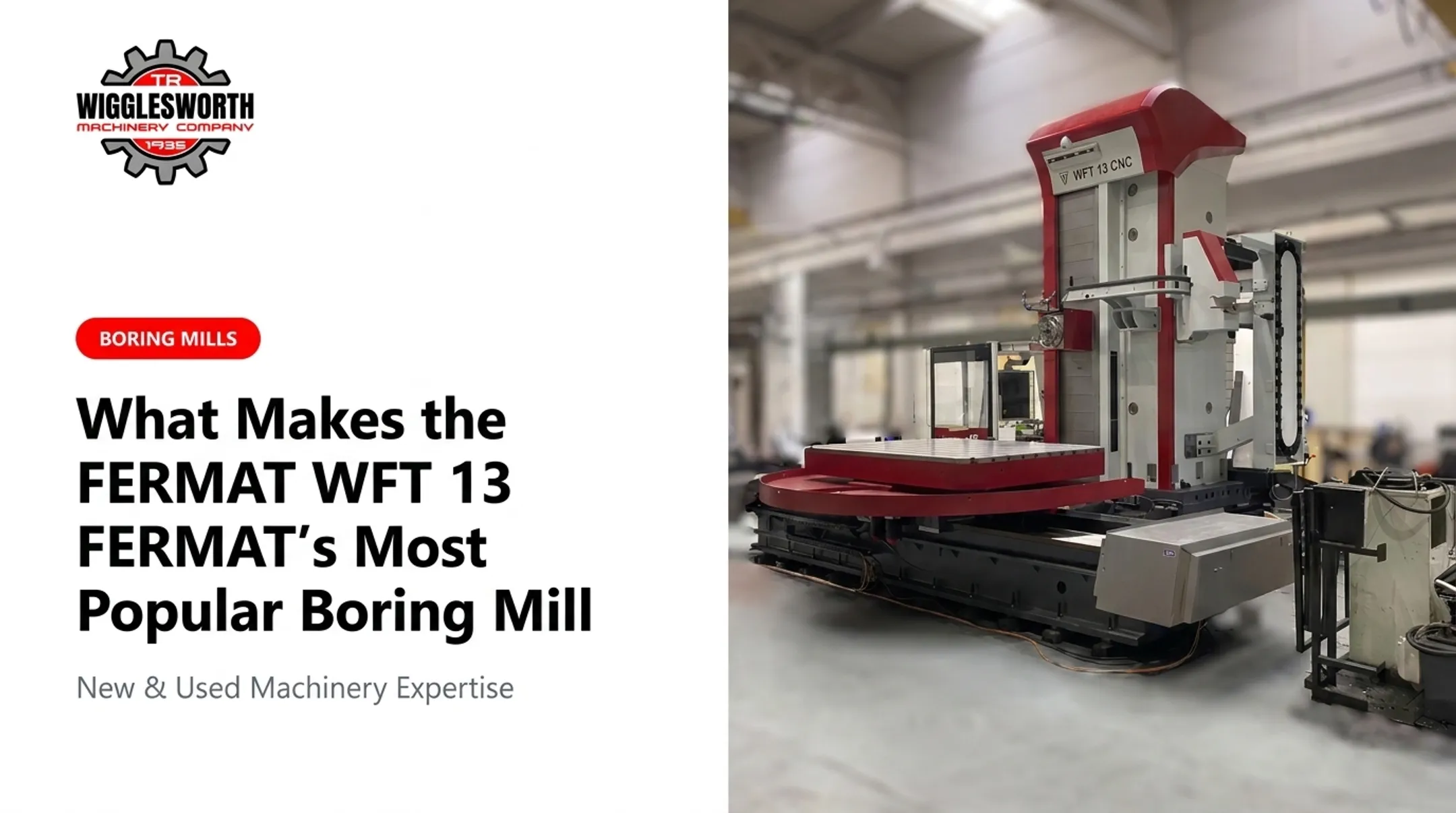
The FERMAT WPT 130 is a table-type horizontal boring machine with linear guidance. FERMAT, founded in 1990, builds horizontal milling and boring machines across table-type and floor-type lines, and its stock catalog places the WPT 130 in the table-type family—not a vertical-boring lineup.
Buyers researching a "WPT 130 L" often assume vertical orientation from naming conventions used elsewhere in the industry. FERMAT does use an "(L)" tag on a different model, the WF 13 R (L) floor-type horizontal boring mill, per Wigglesworth's product catalog.
That machine is a separate family. It is not proof that a WPT 130 L exists as a documented vertical variant.
Vertical Boring Mill vs. Horizontal Boring Mill
- Vertical boring mill / VTL: Workpiece sits on a rotating table; the tool turns, bores, or drills while the work spins (Modern Machine Shop on turning).
- Horizontal boring machine: Spindle runs on a horizontal axis; the workpiece stays clamped to a stationary or single-axis table—the category FERMAT assigns to the WPT 130.
Two Published Configurations
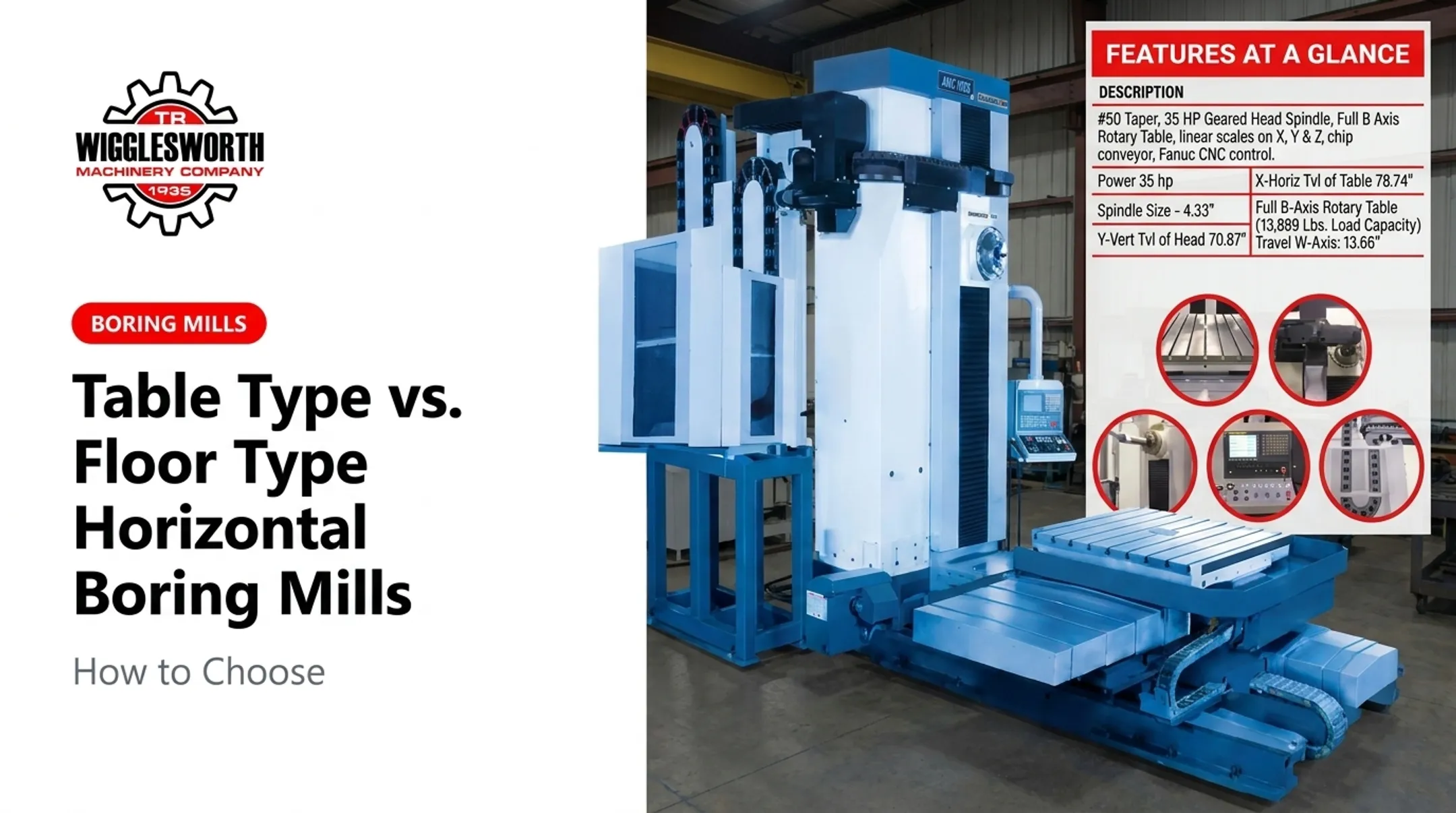
FERMAT's site lists two separate WPT 130 stock builds with different specs:
| Spec | Configuration A | Configuration B |
|---|---|---|
| X/Y/Z/W travel | 4,000/2,500/1,500/800 mm | 4,000/2,500/1,500/800 mm |
| Spindle diameter / max speed | 130 mm / 3,000 rpm | 130 mm / 3,400 rpm |
| Table plate / rated load | 1,800 x 2,200 mm / 20,000 kg | 1,800 x 2,600 mm / 20,000 kg |
| Max power / control | 37 kW / "Fanuc Fermat" | 31 kW / "HH TNC 7 Basic" |

Neither stock listing confirms which build (if either) matches what's being sold as a "WPT 130 L." Neither page is dated. Treat any specific figure as configuration-dependent until an authorized dealer verifies it against your quote.
What's New on the WPT 130 L?
Here's the honest answer: no dated FERMAT bulletin was found announcing new features specific to a WPT 130 L. That doesn't mean nothing has changed on the platform. It means the changes visible on the manufacturer's own pages need to be described carefully, not billed as a fresh launch.
What's Actually on the Stock Listings
Configuration A's accessories section lists an automatic tool changer (ATC 20/32/40/60/90/120), an operator shield, and filtered tool cooling. It also includes UHM/PHM tooling heads and an OMG TA26_T attachment. These solve real shop-floor problems:
- ATC reduces manual tool swaps during multi-operation jobs on large parts.
- Operator shield improves chip and coolant containment during long boring cycles.
- Filtered tool cooling extends coolant life and reduces contamination in the cutting zone.
None of this is labeled "new" on FERMAT's page. It's listed as available equipment for that specific stock build.
A Possible Control Update
The two configurations list different CNC controls: one runs a "Fanuc Fermat" package, the other runs "HH TNC 7 Basic," a Heidenhain TNC 7 variant. Heidenhain's TNC 7 generation brings a modern touchscreen interface and updated programming workflow compared to older TNC platforms.
That's a genuine control difference between the two builds. What's not verified is which build represents the current production standard, or whether the newer control is what's actually shipping as the "L" variant.
Buying insight: ask for a dated change notice and a build-specific options sheet before assuming any accessory or control is standard on the machine you're quoting.
How the Updates Affect Real Machining Work
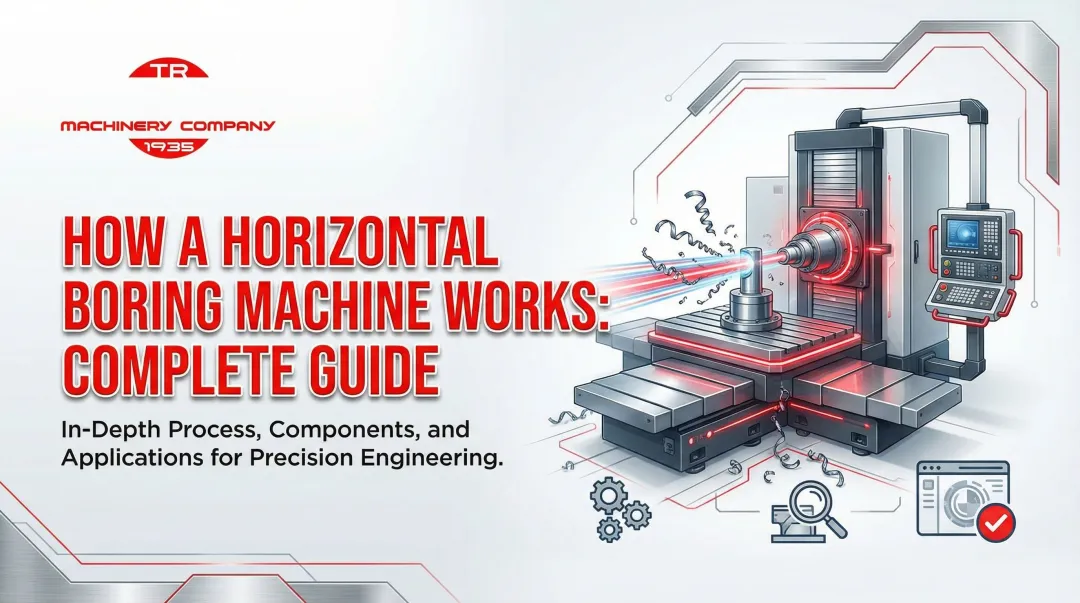
A horizontal boring mill like the WPT 130 handles large, secured workpieces differently than a rotating-table machine. The part stays clamped. The tool spindle does the moving across X, Y, and Z, with the W-axis ram providing additional reach into the workpiece.
A typical job on this type of machine follows a predictable sequence:
- Load and indicate the workpiece on the table, verifying it's within the rated load and clamping envelope.
- Select workholding appropriate to the part's geometry and the table's 1,800 mm (~71 in) class width.
- Set tools in the ATC or manual toolholder, confirming reach against the 800 mm (~31 in) W-axis travel.
- Run the program, using the control's positioning accuracy across the full 4,000 mm (~157 in) X-axis range if the part demands it.
- Inspect and unload, checking bore diameters and face flatness against print tolerances.

Trade-Offs to Plan For
- Floor space: a 4,000 mm X travel needs substantial square footage, plus clearance for the ram and tooling.
- Foundation: neither published listing includes a foundation drawing, so this needs to come from a site-specific quote.
- Rigging: a 20,000 kg (~44,000 lb) table rating implies serious crane or rigging capacity for loading heavy parts.
- Training: switching between FANUC-style and Heidenhain TNC 7 controls involves different programming habits for operators.
Beyond those site and setup constraints, tooling strategy shapes day-to-day throughput. For high-mix shops running varied parts, the ATC and flexible tooling setup matter more. For repeat production of a single part family, a fixed tooling arrangement may be simpler and cheaper to maintain.
Where the WPT 130 L Fits in a Machine Shop
The WPT 130 L earns its place when the job calls for machining large, stationary parts from multiple sides without re-clamping. That's different from a vertical boring mill's strength: precise turning and facing on rotating parts.

Good fits for a horizontal platform like the WPT 130 L:
- Large gearbox or pump housings needing bores from several faces
- Heavy structural weldments requiring flat-face milling and hole patterns
- Base plates and frames too large or oddly shaped for a rotating table
Better suited to a vertical boring mill or VTL:
- Large-diameter rings, discs, and drums where turning is the primary operation
- Parts needing consistent facing across a rotating surface
- Jobs where the workpiece's own rotation simplifies balanced cutting
Wigglesworth's vertical boring mill inventory covers that side of the equation, including Webster & Bennett VTL platforms, if your part is better suited to a rotating table than a fixed one.
Quick Qualification Checklist
Before locking in either machine type, compare against verified specs:
- Part diameter, height, and weight vs. table load and travel limits
- Material and required tolerances vs. spindle speed range
- Tooling needs vs. available ATC or manual toolholder capacity
- Workholding method vs. table dimensions
- Cycle time and inspection process vs. control capability
Buying, Installation, and Support Considerations
Before requesting a formal quote, get answers on these points:
- Which features are standard versus optional on the specific build being quoted?
- What table size, load rating, and workholding configuration ship with it?
- Which CNC control package is included, and what's the training curve?
- What tooling, ATC configuration, and probing options are available?
- What's the delivery timeline, warranty term, and service arrangement?
Site Planning Checklist
Confirm these before committing floor space:
- Floor loading and foundation requirements for the actual quoted weight
- Incoming power supply matched to the machine's rated draw
- Coolant and chip handling layout
- Crane or rigging access for loading heavy workpieces
- Clearance around the full axis travel, not just the machine footprint
With site requirements mapped, confirm configuration, delivery, and support with a dealer who knows the machine line.
T.R. Wigglesworth Machinery Company has supplied new and used machine tools since 1935 and is an authorized dealer for FERMAT equipment, among other brands. The team can walk through available builds, parts, delivery, installation, and training for machines in inventory.
Before finalizing a purchase, confirm current availability, lead time, pricing, and support scope directly with T.R. Wigglesworth Machinery Company or the appropriate FERMAT representative.
Frequently Asked Questions
What does "boring mill" mean?
A boring mill enlarges or finishes existing holes in a workpiece using a rotating cutting tool. Shops use it when hole diameter, location, or finish needs more control than drilling alone can deliver.
What is the FERMAT WPT 130 L designed to machine?
FERMAT's documentation describes the WPT 130 platform as a horizontal boring machine intended for large, stationary workpieces needing multi-face access. Confirm the specific "L" configuration's envelope with FERMAT or an authorized dealer before sizing a part to it.
What is new on the FERMAT WPT 130 L?
No dated FERMAT bulletin confirms specific new features for an "L" variant. Published stock listings show accessory options like an automatic tool changer and a newer Heidenhain TNC 7 control, but these vary by build, not by a confirmed model update.
How is a vertical boring mill different from a horizontal boring mill?
A vertical boring mill rotates the workpiece on a table while the tool stays largely stationary. A horizontal boring mill clamps the workpiece in place and moves a horizontal tool spindle around it instead.
What should I confirm before buying a WPT 130 L?
Confirm the work envelope, table load, control package, tooling and ATC configuration, foundation and utility requirements, installation scope, lead time, and configuration-specific pricing directly with the manufacturer or dealer.
Can T.R. Wigglesworth Machinery Company help with the WPT 130 L?
Yes. As an authorized FERMAT dealer for new and used machine tools, Wigglesworth can discuss configurations, parts, delivery, installation, and training, and help verify current specs before you buy.