
The FERMAT WFT 13 gets discussed a lot in terms of numbers: table load, travel distances, spindle diameter. Those specs matter, but they only tell half the story. What actually makes this machine FERMAT's own flagship claim to fame is how those numbers translate into fewer headaches on real jobs.
This article breaks down why FERMAT identifies the WFT 13/15 family as its most popular table-type horizontal boring mill, what the machine actually does for large-part machining, and what buyers should check before committing floor space and budget to one.
Key Takeaways
- The WFT 13 is a CNC horizontal, table-type boring and milling center built for large, heavy, and geometrically complex parts.
- Table capacity, wide axis travel, and single-setup multi-operation cutting define its shop-floor value.
- Heavy manufacturing, welded structures, bearing housings, and mold work benefit most from its envelope and rigidity.
- Base the purchase on configuration fit, not popularity alone.
What Is the FERMAT WFT 13 (Brief Context)
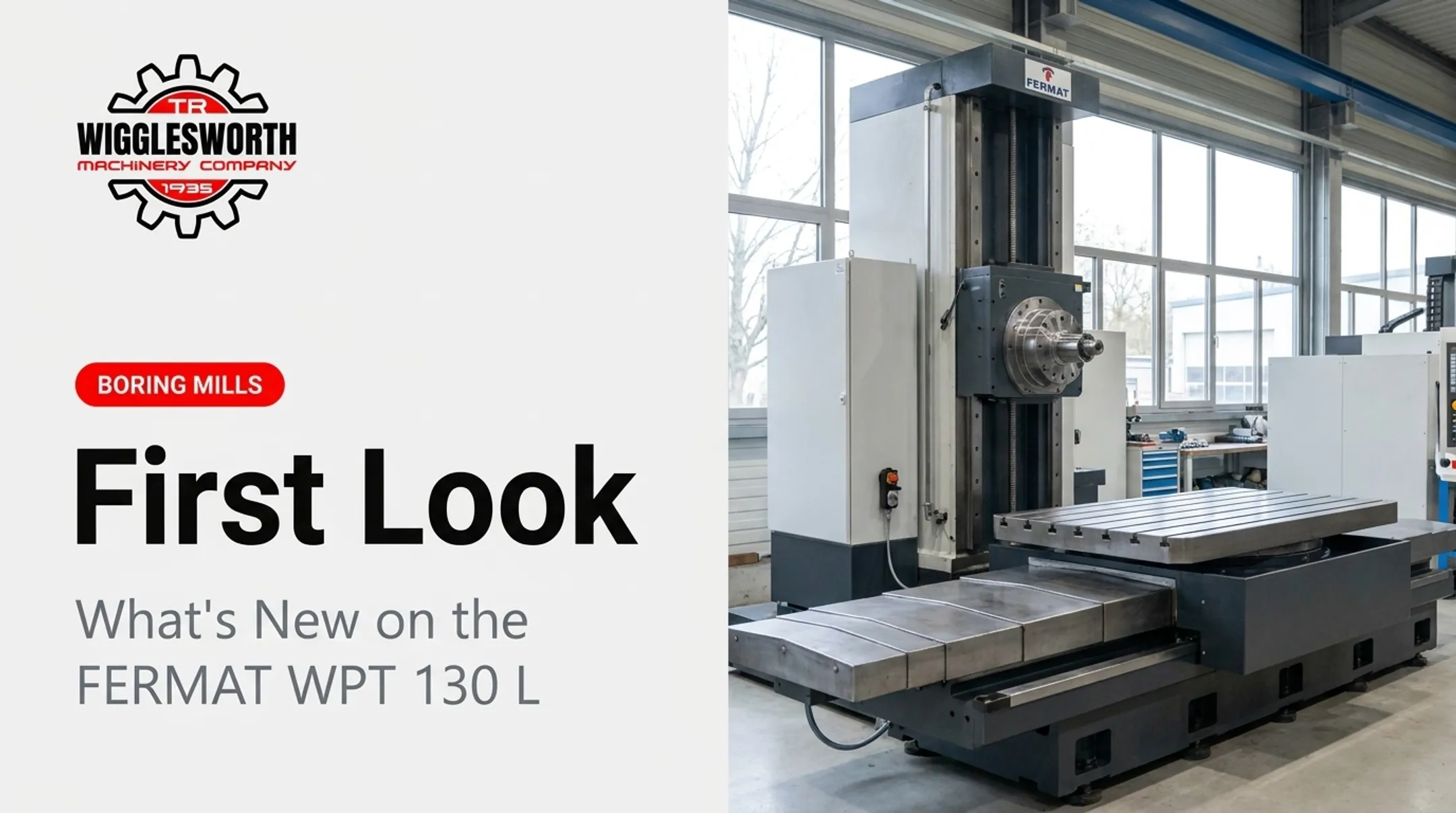
The WFT 13 is a CNC horizontal boring, milling, and drilling machine. FERMAT classifies it as a table-type universal boring mill: the workpiece sits on a moving table rather than the machine traveling around a fixed floor plate.
That layout choice matters when you compare machine designs. Table-type mills generally suit parts that fit within a defined table and rotary-axis footprint.
In practical terms, shops use horizontal boring mills like this one for:
- Large welded structures and fabricated frames
- Machine bases and bed castings
- Bearing housings requiring precise bore alignment
- Mold components and large plate work
- Assemblies where hole-to-face relationships must hold across multiple features
Larger travel and table capacity buy fewer setups. A shop can hold a part in one place through boring, milling, drilling, and threading that would otherwise mean repositioning on a smaller center or moving the job to a second machine.
Configuration Options Buyers Should Know
FERMAT sells the WFT 13 as a configurable platform, not a single fixed spec sheet. According to the manufacturer's current product listing, available options include:
| Parameter | Available Range |
|---|---|
| Spindle diameter | 130 mm (110 mm also referenced in some listings) |
| Spindle (W-axis) travel | 800 mm (31.5 in) |
| X-axis travel | 2,000 / 3,000 / 4,000 / 5,000 mm |
| Y-axis travel | 2,000 / 2,500 / 3,000 / 3,500 mm |
| Z-axis travel | 1,500 / 2,000 / 2,500 / 3,000 mm |
| Table load capacity | 20,000 kg (44,000 lb) standard; 10,000 / 25,000 / 50,000 kg options |
| Spindle speed | Up to 3,400 rpm standard, 4,000 rpm optional |
| CNC control | Heidenhain, Siemens, or Fanuc |
T.R. Wigglesworth has listed in-stock WFT 13 units with 157.5 inches (4,000 mm) of X-axis table travel and Heidenhain iTNC 530 controls. That pairing is a useful reference for what a shop might actually find available versus the full range on paper.
Key Advantages of the FERMAT WFT 13
Specs alone don't sell a machine. What matters is how those numbers show up on the shop floor — in part size handled, alignment held, and time saved between operations. Here's where the WFT 13 earns its reputation.
Large Capacity for Oversized and Heavy Workpieces
FERMAT's current documentation lists a 20,000 kg (20-ton) table load capacity alongside X and Y travels reaching 4,000 mm (157 in) and 2,000 mm (79 in) on certain configurations. These are two separate specs (load rating and axis movement), not a fixed table plate size, and buyers should confirm both against the specific configuration they're quoting.
Why this matters in practice: adequate travel and load capacity let a shop mount a large part directly on the machine instead of splitting the job across two or three smaller centers.
LDS Metall, a shop running a WFT 13, reports using the machine's up-to-20-ton, 4,000 mm (157 in) X-travel capacity for baseplates, frames, gearbox housings, and bearing seats. Those are the parts that typically force a choice between subcontracting or working around a smaller machine's limits.
KPIs to track here: maximum part weight handled in-house, number of setups per part, and percentage of work no longer sent to outside vendors.
Heavy manufacturing, energy equipment, aerospace and defense structures, and shops building large welded frames get the most from this envelope when parts already exceed a standard machining center.
Stability and Accuracy for Large-Part Machining
Big parts amplify small problems. Vibration, deflection, and thermal drift show up as flatness errors, chatter marks, or misaligned bores on large surfaces in ways they simply don't on smaller work.
FERMAT's published design approach uses annealed gray cast-iron construction in the column and bed, intended to absorb cutting-induced vibration. An earlier FERMAT catalog cites 4 arcseconds of rotary-table positioning precision. That figure applies to the rotary axis specifically, not as a blanket linear-accuracy claim for the whole machine.
Stable support and controlled cutting forces matter because they reduce:
- Rework from out-of-tolerance bores or faces
- Scrap on expensive castings or weldments
- Inspection failures on bearing seats and mounting surfaces
- Time lost re-machining after chatter or deflection
Post-weld machining, long faces, mold components, and multi-feature assemblies benefit most when several surfaces must stay accurately related to one another.
Multiple Operations and Fewer Setups
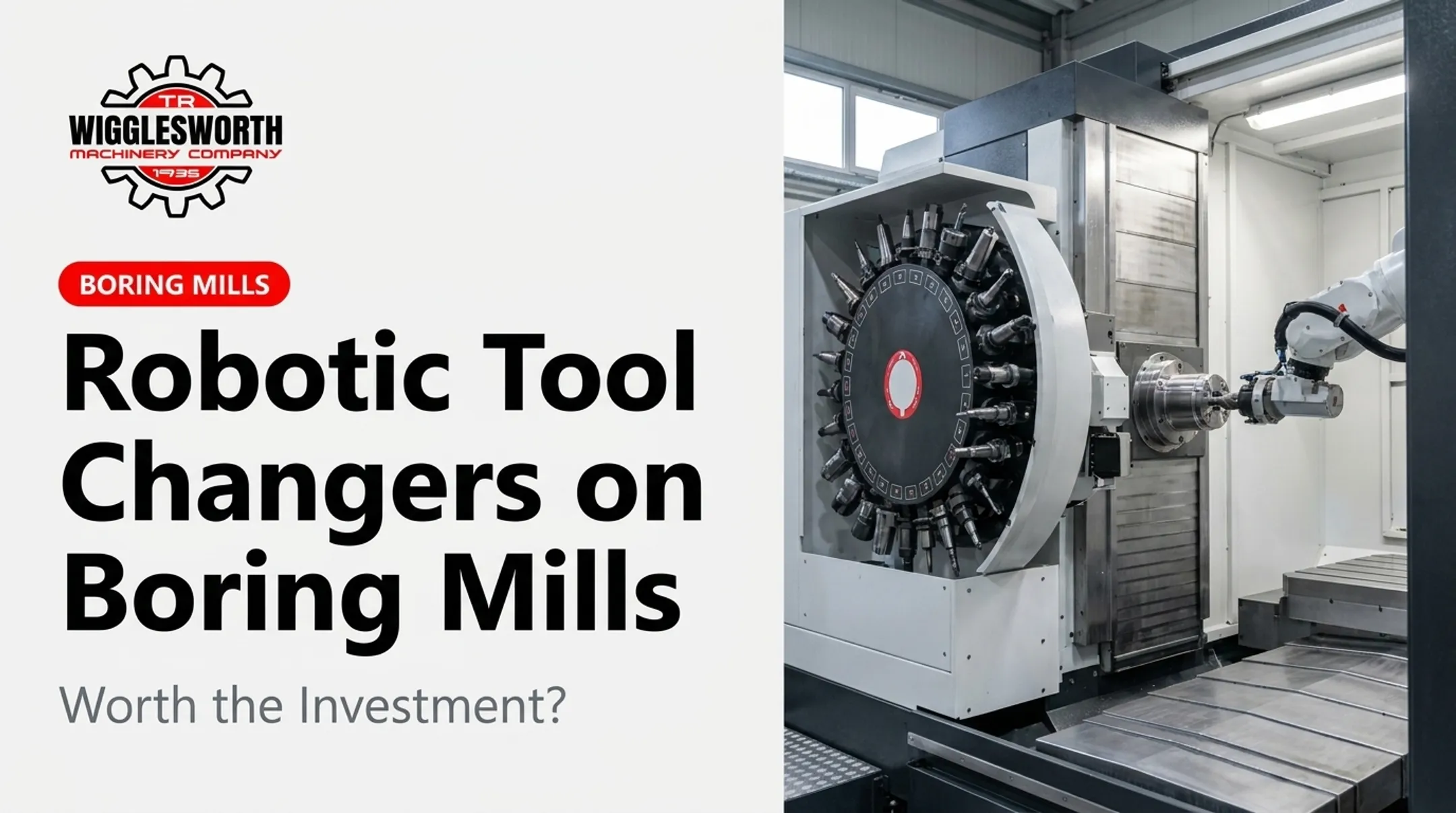
The WFT 13 handles milling, coordinate drilling, boring, and threading, with optional automatic milling heads and tool-change accessories ranging from 20 to 120 tools. Combined on one machine, that means a shop can bore a housing, face a mounting surface, and drill a bolt pattern without unclamping the part.

Fewer setups preserve datums. Every time a large part gets unclamped and repositioned, alignment error has a chance to creep in. Keeping related features in one setup reduces that risk. Actual time savings still depend on the part and process, not a fixed percentage.
Compare the alternative: moving a 15-ton bearing housing between three machines means three crane lifts, three re-fixturing operations, and three chances for alignment drift. One machine, one setup, removes two of those variables entirely.
Complex weldments, irregular castings, and low-volume, high-value parts are where handling risk usually outweighs pure cycle-time savings.
The right machine choice depends on your actual part mix — dimensions, tolerances, tooling, and volume — not on which model sells the most units industry-wide.
What Happens When the Right Boring Mill Is Missing or Ignored
Running large parts on a machine that's undersized for the job (in travel, load capacity, or rigidity) doesn't just slow things down. It changes how work gets planned.
Shops without adequate capacity typically end up with:
- More handling and alignment risk from repeated repositioning between machines
- Longer lead times as work-in-process sits waiting for the next available machine
- Higher chance of vibration and rework when a workpiece overhangs a table it wasn't sized for
- Greater reliance on subcontractors for operations the in-house machine can't reach
- Difficulty meeting inspection requirements on bores or faces that need to relate precisely
The reverse problem exists too. Buying more machine than the work justifies creates its own costs: foundation work, higher energy draw, extra floor space, and operator training for capabilities that rarely get used.
A capacity review against your actual part family (not your biggest hypothetical job) should come before any purchase decision.

How to Get the Most Value from the FERMAT WFT 13
The WFT 13 delivers the most value when its capacity matches a defined part family, and when you plan programming, workholding, and maintenance together rather than figuring them out after installation.
Before purchase:
- Document your representative parts : dimensions, weight, material, tolerances, and tooling needs
- Confirm foundation, floor loading, power, and chip management requirements with the supplier
- Match spindle configuration and travel options to your actual work, not your largest theoretical job
During production:
- Use stable fixturing and stress-relieve workpieces where warranted
- Track setup hours, first-pass yield, and outside-processing costs to quantify the machine's real value
- Build documented setup procedures so results stay repeatable across operators
Service and support:
- Schedule preventive maintenance and spindle checks at regular intervals
- Keep replacement tooling and CNC software support lined up before you need them
- Train operators specifically on the machine's rotary table and tool-change routines

T.R. Wigglesworth Machinery Company has represented FERMAT in the U.S. since becoming the brand's first authorized American distributor. The company offers new and used WFT 13 units with delivery, installation, and operator training included. That mix of machine plus setup support matters more at this scale than it does for a standard mill. Installation errors on a 90,000-pound machine are expensive to undo.
Decision checklist: Does the WFT 13's envelope, table load, spindle configuration, and tooling package match your current part mix and realistic growth plan, not just your biggest possible job?
Conclusion
The WFT 13's popularity comes down to practical capability:
- Handles large and heavy parts
- Holds stability across big surfaces
- Combines operations that would otherwise need multiple machines
Those advantages compound when the machine is correctly configured, properly installed, and backed by trained operators and a real maintenance schedule.
Before buying, compare verified WFT 13 specifications and configuration options against your own part mix, tolerances, and support needs. Popularity is a reasonable starting point for research. It shouldn't be the only reason you buy. T.R. Wigglesworth Machinery Company can help you match a WFT 13 configuration to your production and support requirements.
Frequently Asked Questions
Who are the manufacturers of horizontal boring mills?
FERMAT, TOS Varnsdorf, Shibaura Machine, and WaldrichSiegen (which produces UNION-brand boring mills) all manufacture horizontal boring machines. Distributors like T.R. Wigglesworth sell and service these machines but aren't the original manufacturer.
What are the different types of horizontal boring mills?
The three main layouts are table-type, floor-type, and planer-type, distinguished mainly by how the workpiece and machine structure move relative to each other. The WFT 13 is a table-type horizontal boring and milling center, meaning the part sits on a moving table rather than a fixed floor plate.
What is the maximum table load capacity of the FERMAT WFT 13?
The standard configuration lists a 20,000 kg (20-ton) table load capacity, with 10,000, 25,000, and 50,000 kg alternatives available depending on the build. Confirm the exact rating for your specific configuration before finalizing a quote.
What operations can the WFT 13 perform in one setup?
It handles milling, coordinate drilling, boring, and threading, with optional automatic milling heads for extended capability. Actual operations available depend on the tooling and accessories included in your specific configuration.
Is the FERMAT WFT 13 available new or used?
Yes. T.R. Wigglesworth Machinery Company carries both new and used WFT 13 units, often with immediate delivery, installation, and operator training included in the sale.